The Petroleum and Natural Gas Senior Staff Association of Nigeria (PENGASSAN) has addressed some of the challenges facing the oil and gas industry, insisting that pegging the exchange rate at N450 to a dollar, petrol could be sold at N00 per litre.
PENGASSAN revealed this at a press conference on Tuesday, during the presentation of its communique at the 3rd Edition of the PENGASSAN Energy and Labour Summit, themed ‘The Future of Nigeria’s Oil and Gas Industry: Energy Mix, Energy Security, Artificial Intelligence, Divestment and Crude Oil Theft.’
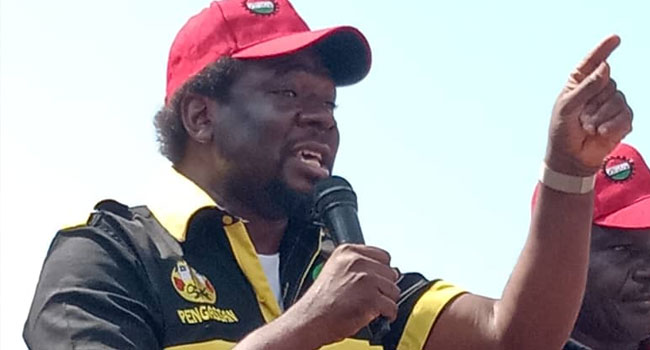
The PENGASSAN President, Festus Osifo, reiterated the association’s call for strategic management of the country’s exchange rate, as he provided a detailed analysis of how devaluation has driven up the cost of petrol, despite government measures.
Osifo said the real problem is devaluation (of the Naira), explaining that the devaluation of the Naira has had far-reaching effects across multiple sectors, including fuel pricing, arguing that, contrary to the popular narrative, the removal of fuel subsidies is not the primary cause of Nigeria’s skyrocketing petrol prices.
He said: “If exchange rate was pegged at N450 to a dollar, PMS could have been less than N400. In May last year, the official exchange rate was N450. If Total Energies made a profit of $200 million, you would multiply that by 450 to get the Naira equivalent. Today, that same $200 million would be multiplied by N1,600; so you can see how much more naira the government is collecting.
“If the exchange rate was frozen at N700 for distributors in the oil sector, the price of petrol wouldn’t have risen so sharply. The Association had presented this suggestion to stakeholders as early as last year, but little progress was made. This is how devaluation has significantly increased the cost of doing business in the country,” said.
Osifo continued: “This is why agencies like the Federal Inland Revenue Service (FIRS) and the Nigeria Customs Service, NCS, are declaring higher revenues. That’s why you hear Customs and FIRS saying they have made trillions of naira. It’s not from subsidy removal; it’s the result of devaluation and exchange rate fluctuations”.
“PENGASSAN has been advocating for the government to manage the exchange rate more effectively, especially in sectors like oil and gas, where fluctuations have a direct impact on the price of fuel. We went on to clarify the impact of devaluation on government revenues and fuel prices. Using examples from both the oil sector and import taxes, we also highlighted how the exchange rate has inflated costs, with a focus on the devaluation of the naira and its impact on fuel pricing.
“No government in the world floats its currency 100 percent; maybe the U.S, because they are a standard reference. Every other country manages their currency in one way or another. Referencing on economic models from China, Japan, and Russia, Nigeria’s full currency float, in the absence of strong supply controls, has contributed to the current crisis.
“The issue of devaluation extends beyond petrol, affecting various aspects of the economy. Devaluation does not just affect petroleum products. If our exchange rate was still 450 naira to a dollar, PMS would be selling for around 320 to 350 naira today. The main issue is not subsidy removal; it is devaluation,” he insisted.
Addressing the ongoing debate around the Dangote Refinery and its role in the local fuel supply, Osifo acknowledged the challenges in securing crude oil for local refining.
He further explained: “International oil companies (IOCs) like Shell, Chevron, and Total have locked in long-term contracts for their crude production, often years in advance. Government cannot simply take crude and give it to Dangote. These companies have invested billions of dollars, and they are at liberty to sell their crude to the highest bidder.”
Osifo also pointed out that the issue of premium payments for crude is also contributing to the pricing challenges between the Dangote Refinery and the Nigerian National Petroleum Corporation (NNPC).
“Dangote is asking for the same price NNPC pays to import PMS from abroad, but NNPC says, ‘You’re a Nigerian company; we can’t pay you the same amount we’re paying foreign suppliers’. However, both parties have reportedly reached a compromise, with Dangote now supplying petrol at a premium of 42 naira above the international price, known as the Platts rate.”
The PENGASSAN boss added that the current price of petrol, estimated at N950 per litre (when all costs are included), is largely due to the cumulative effect of devaluation and the international cost of crude.
“NNPC takes it at N950 per litre and sells to marketers at around N700. If NNPC sold it at the full cost, we’d be buying PMS at N1,100 or N1,200 per litre,” he explained, highlighting the government’s continued role in subsidising fuel to some extent.
Osifo stressed on the importance of proper exchange rate management as a means of stabilising fuel prices and mitigating the effects of devaluation, saying, “We believe the government cannot float its currency 100 percent, especially in a country like Nigeria where supply is not fully controlled. The solution lies in strategic management of the naira, not just the removal of subsidies.”
The Association continued to advocate for a comprehensive approach to addressing the economic challenges facing the oil and gas sector, particularly in light of the country’s volatile exchange rate.