Filling stations in Lagos have increased the price of a litre of petrol from N860 to N930, making consumers pay at least N70 more than what they did a few days ago.
The price increase has also become effective in parts of the country like Abuja and major northern cities, with oil outlets now selling a litre of petrol between N950 to N970, depending on the filling stations. This represented a sharp increase of about N70 to N90 from the initial price of N880 last week.
Reports said that filling stations such as MRS Oil & Gas, Ardova Plc, Heyden, and others that have special agreements with the Dangote Petroleum Refinery, have adjusted their pumps to the new price.
Petrol stations like Matrix Energy, North-West Petroleum, Total Energies, Mobil, Bovas, and Enyo, amongst others, also followed suit.
The new price regime followed an announcement by Dangote Refinery temporarily halting the sale of petroleum products in Naira.
“This decision is necessary to avoid a mismatch between our sales proceeds and our crude oil purchase obligations, which are currently denominated in US dollars,” the company said in a statement earlier in March 2025.
The $20billion refinery based in Lagos said the sales of its products in Naira have exceeded the value of Naira-denominated crude it has received from the Nigerian National Petroleum Company Limited (NNPCL).
“As a result, we must temporarily adjust our sales currency to align with our crude procurement currency,” the company explained.
The refinery said it remained committed to serving the Nigerian market and would resume the sale of its product to the local market in Naira as soon as it received crude cargoes from the NNPCL in Naira.
The announcement by the refinery came amid its price war with the NNPCL.
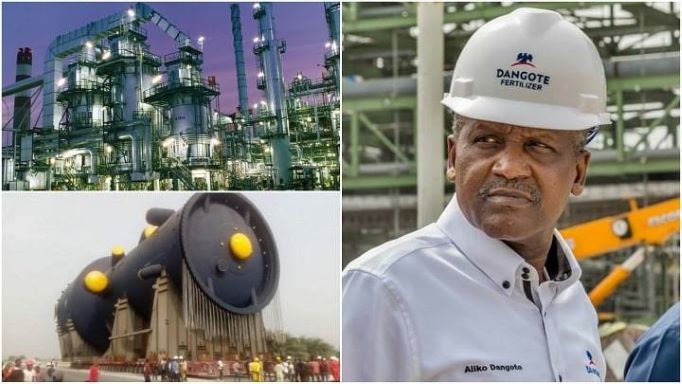
On February 26, 2025, the $20billion refinery owned by Africa’s richest man and industrialist Aliko Dangote slashed the ex-depot price of petrol from N890 to N825 per litre.
Under the new arrangement, customers purchase the premium commodity at N860 per litre at selected outlets in Lagos, N870 in the South-West, N880 in the North, and N890 in the South-South and South-East. Dangote has also reduced the price of diesel in recent times.
Almost immediately, the NNPCL reduced its retail price from N945 to N860 in Lagos, with a similar price reduction reflected at NNPCL outlets in other states of the federation.
Some analysts and industry experts have hailed the price war, saying it will “erode abnormal profit” enjoyed by capitalists, but petrol marketers who still import the premium commodity have lamented the loss they incurred as a result of the sudden price drop.
As part of moves to reduce the strain on the US dollars and guarantee price stability of petroleum products, the Federal Executive Council (FEC) in July 2024 directed the NNPCL to sell crude oil to Dangote Refinery and other local refineries in Naira and not in United States’ greenback.
In March 2025, the NNPCL said its Naira-denominated crude sales agreement with the Dangote Refinery was structured for six months, with March 2025 as the expiration date.
The state company, however, said that talks were on to replace the contract and that over 48 million barrels of crude oil have been made available to Dangote Refinery since October 2024 under the Naira-denominated arrangement.
The NNPCL also said it had made over 84 million barrels of crude oil available to the private refinery since it commenced operations in 2023.
Nigeria, Africa’s most populous nation, faces energy challenges, with all its state-owned refineries being non-operational for decades until 2024.
The country was heavily reliant on imported refined petroleum products, with the State-run NNPCL being the major importer of the essential commodities.
Fuel queues are commonplace in the country. Prices of petrol more than quadrupled since the removal of subsidy in May 2023 by President Bola Tinubu, from around N200/litre to about N1,000/litre, compounding the woes of the citizens who power their vehicles and generating sets with petrol, no thanks to decades-long epileptic electricity supply.
Last December, the billionaire industrialist commenced operations at the facility situated in Lagos with 350,000 barrels a day. The refinery, which was initially bogged by regulatory battles, hopes to achieve its full capacity of 650,000 barrels per day by the end of the year. The refinery has begun the supply of diesel and aviation fuel to marketers in the country and now petrol.
* Media Report