As the clock continues its steady march westward across the globe, parts of the world have already begun celebrating the arrival of New Year 2026, with early festivities taking place in Pacific nations long before midnight in Europe, Africa and the Americas.
The first inhabited nation to officially enter January 1, 2026 is the Republic of Kiribati, a small Pacific Island country whose easternmost atoll, Kiritimati (Christmas Island), lies in the UTC +14 time zone. That unique position just west of the International Date Line means Kiribati’s residents were the first anywhere on Earth to see the New Year dawn.
Kiritimati, part of the Line Islands chain with a population of just over 7,000, formally realigned its time zone in 1995 to ensure its islands would celebrate the New Year ahead of much larger nations.
News reports early on Wednesday, December 31, show local festivities already underway, with residents marking the transition to 2026 while much of the world remained on December 31, 2025.
Following Kiribati’s early midnight, other Pacific Island nations such as Samoa and Tonga have also begun ringing in 2026, according to global time zone tracking.
Shortly thereafter, New Zealand joined the early celebrations with fireworks and light displays over Auckland’s famed Sky Tower, one of the first major cities to usher in the New Year.
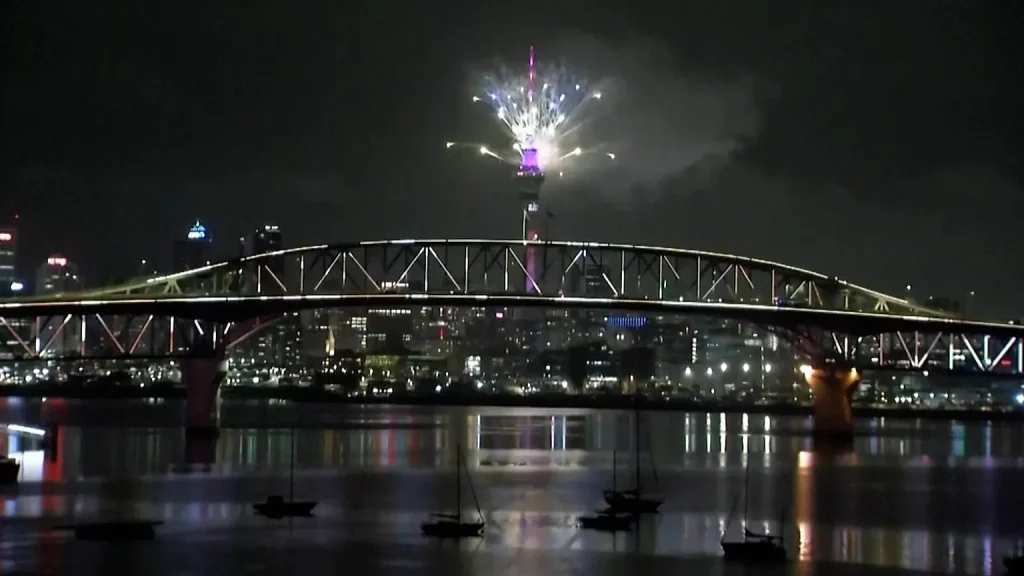
In Australia, particularly its eastern states, the start of January 1 will be marked with grand fireworks, including the world-famous displays over Sydney Harbour, which began colorful festivities earlier in the day local time.
As Pacific nations welcomed 2026, countries across East and Southeast Asia are poised to follow suit just hours later. Cities like Tokyo, Seoul and Taipei traditionally celebrate with cultural rituals such as temple bell tolling and countdown events that reflect both ancient and modern customs.
The progression of New Year festivities reflects the Earth’s rotation and the structure of global time zones maintained under the International Date Line.
As one part of the planet steps into January 1, others remain on the final hours of December 31, creating a rolling wave of celebrations that will sweep across Asia, Africa, Europe and the Americas over the next 24 hours.
European capitals such as London, Paris and Berlin will mark midnight later tonight with parties, concerts, and fireworks, while major American cities such as New York and Rio de Janeiro are set to usher in 2026 even later due to their time zones.
While the timing of midnight varies across time zones, the sentiment is universal: as the globe welcomes the New Year, celebrations reflect both local traditions and global unity.

- Agency Report