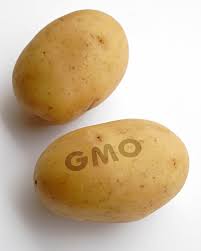
A coalition of over 100 civil society actors, farmers, scientists, lawyers, and academics representing 100 million Nigerian consumers have tasked the Federal government to discontinue plans to introduce genetically modified potatoes and out-rightly ban GMOs in the country.
The coalition stressed that GMOs products violate fundamental human rights and targets Nigeria’s food system for disaster.
The demands of the Coalition followed claims that the government will soon release a report on clinical trials of genetically modified (GM) indicating that GM potatoes will be commercially released in 2025.
The Executive Director of Health of Mother Earth Foundation (HOMEF), Dr Nnimmo Bassey, stressed that any further release of GMOs in Nigeria would be confirmed as a deliberate effort to destroy the Nigerian food system, jeopardise consumers’ health and degrade the environment.
He said: “The House of Representatives, in May 2024, announced a halt on introducing new GMOs and mandated an investigation on GMOs and the approval processes. To date, 4 months later, there is no information on the findings or results of this investigation, yet the National Biosafety Management Agency (NBMA) is warming up to release new GM potatoes.
“It is clear that there are indeed vested interests on the side of the transnational corporations producing the GMOs and their allies in government undermining the health and safety of the Nigerian populace,” he said.
On the GM Potatoes, Bassey said like it is a narrow and short-sighted technological fix that is inappropriate for smallholder farmers in Nigeria, adding that could lead to an irreversible contamination of indigenous potato varieties.
Bassey added: “GM potatoes are banned in Peru and elsewhere and have been continuously spurned in developed countries. It is a wonder that Nigerian farmers are already being painted to clamour for the Potatoes. This was the same strategy used in Uganda and Rwanda.
A Molecular Biologist, Dr Ifeanyi Casmir, noted that just like Bt Cotton, Bt Beans, and TELA Maize, the GM potatoes represents a gradual yet sure erosion of the original germ plasm of Nigerian crops, adding that Nigerians are being misled by half-baked parochial “scientists” toward adopting a technology, whose products are mostly used as biofuels and feed for animals in other countries and not for human consumption.
He said: “What our government needs to do is to address the instability in Plateau State and other potato producing states where banditry has caused farmers to abandon their farms – leading to poor productivity and rising cost of potatoes across the country. Potatoes growers in Plateau State and other places who will accept this genetically modified variety are being set up for devastation.
Similarly, Food Sovereignty Activist and Deputy Director of Environmental Rights Action, Mariann Bassey-Orovwuje, emphasized the regulatory lapses with regard to GMOs, saying: “Up till now, there is no information on the application for the field/clinical trials on the G,M Potatoes on the website of the NBMA whose mandate it is to regulate the use of GMOs and ensure adequate public participation in the decision making process. The secrecy and urgency with which GMO applications and approvals are handled is cause of serious concern.
“These GM potatoes are banned at the potato centre of origin in the Andes, with indigenous farmers warning that GM potatoes are a terrible idea. Additionally, Late blight is not a uniquely African problem; which raises the question as to why it is being forced on Africa; on Nigeria. The simple answer is commercial interests.”
Also speaking, a Public Health Scientist and Director of Programmes at HOMEF, Joyce Brown, noted that there is no information as to whether there have been long-term feeding studies conducted on these GM Potatoes varieties.
She said: “It is not sufficient to carry out field trials or short-lived clinical trials. This GM potato is the same which is being pushed on East Africa; a “cisgenic” variant of the Victoria variety that was originally from South America but selected for use in Africa.
“The GM Victoria was developed by the International Potato Center (CIP) and is genetically engineered with three genes that were taken from Latin American relatives of the potato plant. Cisgenesis modification is still a new and unproven technique, and it is not yet clear how the stack of three genes will interact with each other or with the genetic material of the host plant,” she said.
In her own remarks; a farmer and founder of Network of Women in Agriculture, Lovelyn Ejim, noted that Nigeria does not need genetic modification to address the late blight disease.
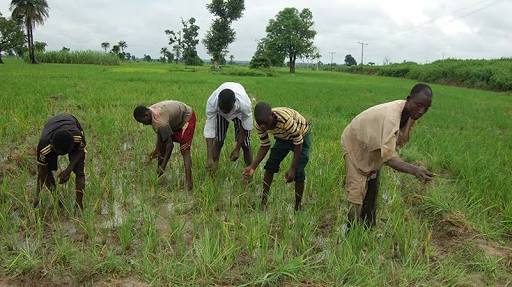
She added: “The disease is not new and simple organic methods have over time proven to be effective including choosing naturally resistant varieties, crop rotation, mixed cropping, providing proper crop nutrition, crop spacing, quick removal of blighted plants etc.
“Nigerian farmers have not asked the government for GMOs. Late blight is a robust and fast-adapting pathogen and therefore will undoubtedly develop resistance to this technology. We are very concerned about the lack of participatory stakeholder engagement with farmers and consumers and the limited information available on the long-term consequences of GMOs, as well as the proprietary issues concerning the GM seeds,” she said.
The groups noted that in the past few months, Nigerians have strongly rejected GMOs especially with the release of the TELA Maize, adding that in different fora, online or onsite where GMOs have been discussed, thousands of Nigerians have condemned the government’s defiant deployment of GMOs – highlighting health and environmental risks, attempts at corporate control of the Nigerian food system, and the clear fact that Nigeria does not need GMOs to address food insecurity.
The Coalition, therefore, called on the House of Representatives to uphold the decision to suspend the introduction of new GMOs into the country and to ensure a thorough assessment of the long and short term impact of GMOs in Nigeria.
The Media and Communication Lead of HOMEF, Kome Odhomor, advised Nigeria to endorse and invest in Agroecology, which is a sustainable system of farming that is able to address major food system challenges in Nigeria including poor productivity, low income for farmers, food
inflation, climate change impacts, gender inequalities, poor access to land and infrastructure etc while mitigating environmental impact.